
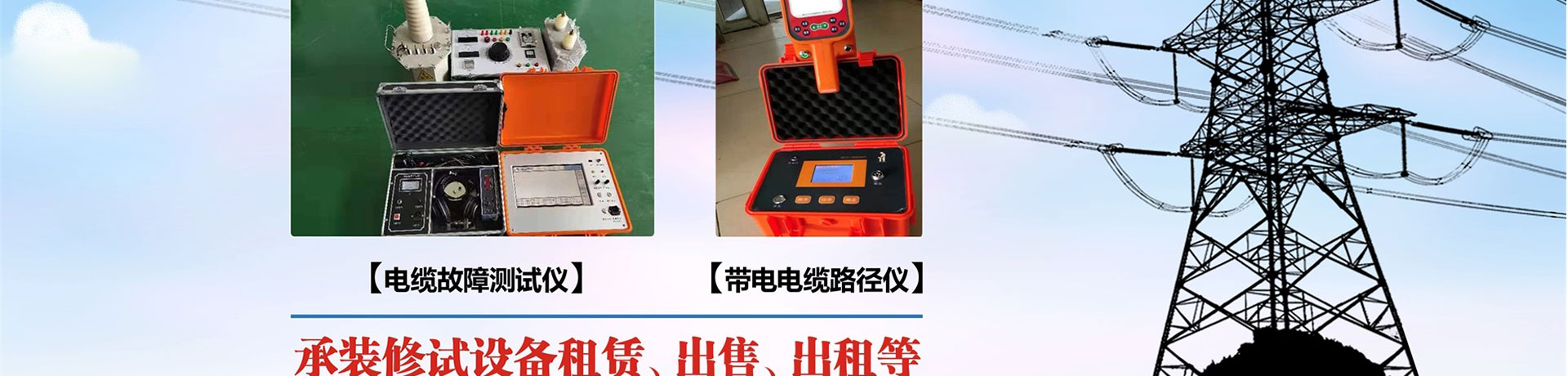
Dielectric Loss Tester is a specialized instrument used to measure the dielectric loss factor of insulating materials in electrical equipment
(usually expressed as tan δ or D) and capacitance value. These parameters are crucial for evaluating the quality and aging degree of insulating materials, especially in the maintenance and fault diagnosis of high-voltage equipment such as transformers, cables, and motors in power systems. By conducting regular dielectric loss tests, potential problems can be detected in a timely manner, preventing equipment failures and ensuring the safe operation of the system.
Main Uses
Insulation Status Assessment: Used to detect aging or moisture in insulating materials of transformers, cables, generators, and other high-voltage equipment.
Quality Control: Inspecting new materials or finished products during the manufacturing process to ensure they meet specified electrical performance standards.
Fault Diagnosis: Helps identify the location and severity of insulation defects, guiding repair work and reducing downtime.
Working Principle
The dielectric loss test is based on applying an AC voltage to the tested object and measuring the current flowing through it to calculate the dielectric loss factor (tan δ) and capacitance value (C). The dielectric loss factor is an indicator of energy loss in insulating materials, reflecting the internal energy consumption of the material. Ideally, the tan δ of a purely capacitive load should be 0, but in practice, due to certain conductivity and polarization effects in insulating materials, the tan δ will be greater than 0. As insulating materials age or become damp, the tan δ value increases.
A typical test process is as follows:
Apply Voltage: Apply an AC voltage of a known frequency (usually 50Hz or 60Hz) to the tested equipment.
Measure Current: Use sensors to measure the total current passing through the tested equipment, including both capacitive and active components.
Calculate tan δ and C: Calculate tan δ and capacitance value C based on the phase difference between the measured total current and voltage.
Features and Functions
High-Precision Measurement: Provides accurate measurement of dielectric loss factor and capacitance, with resolution down to microfarads (μF) or even lower.
Multiple Test Modes: Supports different types of testing requirements, such as normal wiring, reverse wiring, self-excitation method, etc., adapting to various field conditions.
Automatic Temperature Compensation: Considering the influence of temperature on dielectric loss, some advanced models are equipped with temperature compensation functions to provide corrected measurement results under different ambient temperatures.
Data Storage and Transmission: Supports storage of measurement data and can transmit data to computers via USB, Bluetooth, and other interfaces for further analysis.
Development Trends
With the advancement of technology, dielectric loss testers are becoming more intelligent and portable:
User Interface Optimization: Modern devices often come with touchscreen interfaces, making operation more intuitive and convenient, reducing the learning curve.
Application of Wireless Communication Technology: Makes data processing and sharing easier, improving work efficiency, and also supports remote monitoring and data analysis.
Improving Test Speed and Accuracy: Manufacturers continuously explore how to shorten test time while ensuring measurement accuracy to better meet field testing needs.
In summary, the dielectric loss tester is an important tool for ensuring the safe and stable operation of power systems and other high-voltage equipment. Whether it is quality control of new equipment or maintenance inspection of old equipment, it plays an indispensable role. With technological progress, such testers will continue to evolve, providing more efficient and accurate solutions to meet a wider range of application needs.