
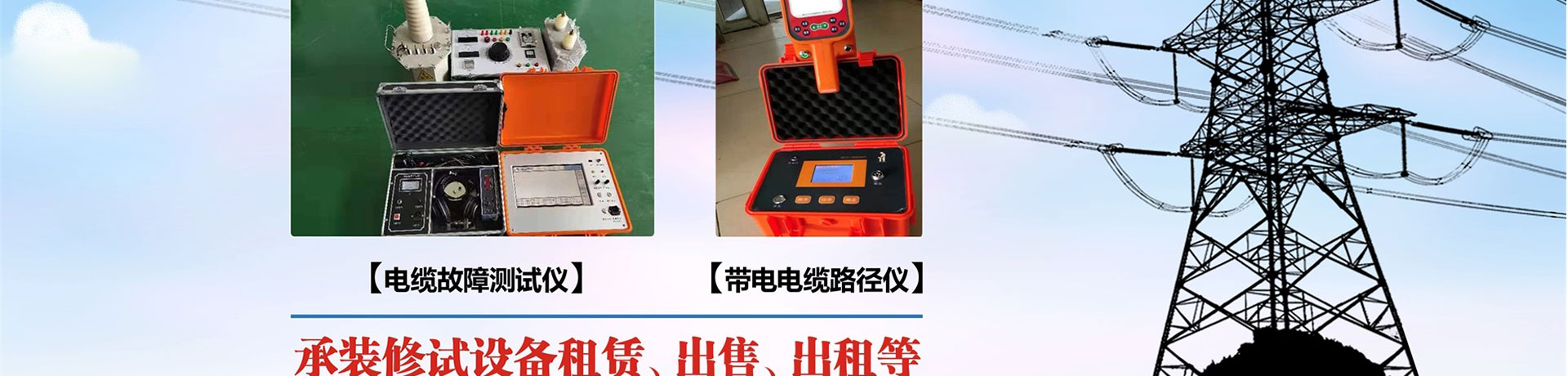
How to locate broken cable faults in low-voltage underground cables? Currently, most cable faults are laid underground. However, during long-term underground operation, cables can be damaged due to current and chemical components in the soil environment, leading to various cable faults, with broken cable faults being the most common. To locate broken cable faults in low-voltage cables, it is usually necessary to use cable fault detection instruments. The process involves two steps: distance measurement and pinpointing. First, connect the faulty cable to the cable fault testing host, transmit pulse signals to the faulty cable, and analyze the waveform generated by the pulse signal propagation speed in the cable, which is transmitted in real-time to the host display. By analyzing the waveform data, the distance between the cable fault point and the testing end can be determined. Second, based on the known distance to the cable fault point, locate the approximate position of the fault point, and use a cable fault precision locator to precisely pinpoint the broken cable fault. However, before precise positioning of the broken cable fault point, it is essential to know the burial path of the underground cable. If the cable burial path is unclear, use a cable path detector to find the cable route direction. Then proceed with precise fault point location. The above are the current methods and steps for locating broken cable faults in low-voltage underground cables. To ensure the quality and efficiency of cable fault location, it is also very important to choose a reliable set of cable fault detection instruments.